
Windows That Shed Water Instead of Collecting It
Stucco Window Flashing & Waterproofing Repair in Houston for homes with recurring leaks at window perimeters and concealed moisture damage
Properly installed window flashing creates a layered drainage system that directs water outward before it contacts the wall assembly, but many stucco homes were built with incomplete or incorrectly sequenced flashing that allows wind-driven rain to penetrate around window perimeters. Stucco King Construction LLC performs window flashing repair by removing stucco around affected windows, installing head flashing that overhangs the window frame, adding sill pans beneath the window that catch and redirect water, and integrating jamb flashing that connects these components into a continuous drainage plane. In Houston's climate, where intense storms drive rain horizontally into wall surfaces, missing or improperly lapped flashing turns window openings into primary water intrusion points that eventually rot sheathing and framing.
Window waterproofing repair addresses the interface between window frames and the surrounding stucco system, where multiple materials meet and differential movement creates gaps that admit water. This work often connects to broader stucco remediation needs when moisture has already damaged wall components, or to stucco drainage repair when the wall lacks adequate exit paths for water that does penetrate. EIFS repair around windows requires particular attention because the foam insulation layer can trap water against sheathing if drainage planes aren't continued behind the foam.
Schedule a window-focused inspection to determine whether current leaks are localized or indicate more extensive flashing failures throughout your home.
Our Services
Stucco King Construction provides window flashing and waterproofing repair for Houston-area homes and commercial properties in Houston, Katy, Cinco Ranch, Sugar Land, Pearland, Cypress, Spring, The Woodlands, Conroe, Richmond, and surrounding communities. Windows are one of the most vulnerable areas of a stucco exterior because multiple building materials and joints come together around the opening, creating potential pathways for wind-driven rain to reach the wall assembly. Proper window waterproofing can involve sill pans, head flashing, jamb flashing, weather-resistive barrier integration, sealants, and properly layered drainage details that direct water away from the structure. When flashing is missing, damaged, or improperly installed, moisture can travel behind stucco and damage sheathing and framing around the window. Our team can evaluate recurring window leaks and determine whether the problem is isolated to the opening or connected to a larger stucco water intrusion or remediation issue.
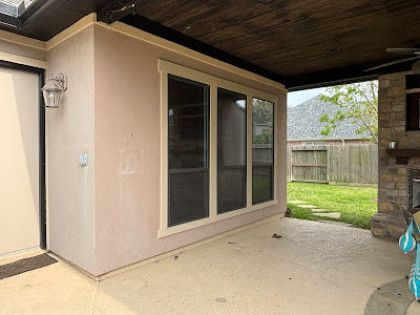
The Components That Keep Window Openings Dry
Effective window flashing begins with a sill pan installed beneath the window that extends past the rough opening on both sides and slopes outward to drain any water that enters the opening. Head flashing is installed above the window with a drip edge that prevents water from running down the wall face and curling back under the window head, while jamb flashing at the sides integrates with both the sill pan below and head flashing above. Each component must be properly lapped so water flowing down the drainage plane cannot reverse direction and enter the wall cavity, and all flashing must tie into the weather-resistive barrier behind the stucco to maintain continuity across the entire wall surface.
Once window flashing repair is complete, storms no longer produce water stains on interior walls below windows, trim stays dry, and the wall cavity behind window jambs remains moisture-free between weather events. You'll notice that heavy rain events no longer cause interior damage, even when wind drives rain directly against window openings. Balcony stucco repair often includes similar flashing details where balcony doors penetrate exterior walls, preventing leaks that would otherwise damage ceilings and interior finishes below occupied spaces.
Window flashing repair may be part of a larger stucco water intrusion repair project if multiple windows show leaking, or if moisture testing reveals damage extending beyond the immediate window area. Kick-out flashing repair at roof terminations and stucco drainage repair to manage bulk water further protect the wall assembly, but window flashing remains the critical detail that keeps openings themselves from becoming water entry points. Exterior stucco painting over repaired areas restores appearance after flashing installation is complete and the wall has been properly sealed.
Common Window Flashing Questions
Window flashing details determine whether openings shed water effectively or allow chronic intrusion that damages surrounding wall components.
How can you tell if window leaks are caused by flashing failure rather than window seal failure?
Water stains appearing on interior walls beside or below windows, rather than on the window sill itself, indicate that moisture is entering the wall cavity around the window perimeter rather than through failed glazing seals. Moisture detected in the wall framing adjacent to windows confirms that water is bypassing the window unit entirely and penetrating through gaps in the flashing system.
What makes sill pan installation critical for stucco window waterproofing?
The sill pan catches any water that enters the gap between the window frame and rough opening, directing it outward before it can drain into the wall cavity below. Without a sill pan, water that penetrates the window head or jambs flows down into the wall assembly beneath the window, where it saturates sheathing and framing until structural damage occurs.
Why does window flashing repair require removing stucco around the opening?
Effective flashing must be installed behind the stucco and integrated with the weather-resistive barrier on the sheathing, which cannot be accomplished by working from the exterior surface alone. The stucco must be removed to access the rough opening, install flashing components in the correct sequence, and ensure proper lapping that prevents water from reversing direction and entering the wall.
How does Houston's wind-driven rain affect window flashing requirements?
High winds create positive pressure that forces water through gaps that wouldn't leak during vertical rainfall, making properly lapped head flashing and continuous jamb flashing essential. Wind also drives water upward beneath horizontal surfaces, so sill pans must have adequate back dam heights and proper end dam details to prevent water from flowing around the pan edges during severe storms.
When should window flashing repair include EIFS repair or full stucco remediation?
If moisture testing reveals wet sheathing, damaged framing, or mold growth in wall cavities adjacent to windows, the scope must expand beyond flashing replacement to include sheathing repair and proper drainage plane installation. EIFS systems require drainage mat installation behind the foam layer to allow water to exit the wall assembly, which adds complexity compared to traditional stucco over solid sheathing.
Stucco King Construction LLC installs the layered flashing systems that keep window openings dry during Houston's most severe weather. Contact us to evaluate your windows for flashing deficiencies and develop a repair plan that prevents further water intrusion and the structural damage it causes.
